
This post contains affiliate links. As an Amazon Associate and affiliate partner, RadGarden earns from qualifying purchases. That doesn't change what we recommend - we only feature compost bins we'd actually use in our own Zone 8A garden.
The Best Compost Bin Depends on Your Scraps, Space, and Effort Level
Choosing the right compost bin for home garden use comes down to three things: how much kitchen and yard waste you generate, how much room you have, and how hands-on you want to be. A tumbler, an open bin, a worm bin, and a countertop bin all solve different problems, and mixing them up is the most common reason people give up on composting. If you want finished compost for your vegetable beds with minimal turning, a tumbler is usually your best bet. If you have a lot of leaves and yard waste each fall, an open bin holds more volume for less money. A worm bin suits gardeners who want rich castings and don't mind a little extra attention, and a countertop bin is only for collecting scraps until you carry them out to whatever system you choose above.
Quick Picks
Here is a fast overview if you want the short answer. Our pick for best compost tumbler is the VIVOSUN, and our pick for best outdoor compost bin for large yard waste is the Geobin. Note that the countertop bin below is a scrap collector, not a composter on its own, so pair it with one of the outdoor options if you pick it.
| Pick | Best For | Capacity | Effort Level | Pest Resistance | Shop |
|---|---|---|---|---|---|
| VIVOSUN 43 Gallon Tumbling Composter | Small yards, less manual turning | 43 gallons, dual chamber | Low to moderate | Good, fully enclosed | Shop Now |
| FCMP Outdoor IM4000 Dual Chamber Tumbler | Budget-friendly continuous batches | 37 gallons, dual chamber | Low to moderate | Good, fully enclosed | Shop Now |
| Geobin Compost Bin | Large volumes of leaves and yard waste | 216 gallons, expandable | Higher, manual turning | Lower, open design | Shop Now |
| EPICA Stainless Steel Compost Bin | Collecting kitchen scraps indoors | 1.3 gallons, countertop | Low, empty regularly | Good, charcoal filter | Shop Now |
Compost Bin Comparison Table
Use this compost bin comparison to see how each pick stacks up side by side on capacity, pest control, and effort.
| Product | Type | Capacity | Outdoor or Indoor | Pest Control | Turning Method | Best Use | Downside |
|---|---|---|---|---|---|---|---|
| VIVOSUN 43 Gallon Tumbler | Dual-chamber tumbler | 43 gallons | Outdoor | Enclosed, keeps most pests out | Rotating drum, no manual mixing | Small to mid-size yards, suburban kitchens | Assembly takes time and patience |
| FCMP Outdoor IM4000 | Dual-chamber tumbler | 37 gallons | Outdoor | Enclosed, keeps most pests out | Rotating drum, no manual mixing | Continuous batches on a budget | Slightly smaller capacity than VIVOSUN |
| Geobin Compost Bin | Open, expandable mesh bin | 216 gallons | Outdoor | Lower, open sides invite pests | Manual turning with a fork or aerator | Fall leaf cleanup and large yard waste | Not pest-proof, needs regular turning |
| EPICA Countertop Bin | Countertop scrap collector | 1.3 gallons | Indoor | Charcoal filter reduces odor | Not applicable, this is a collector | Holding scraps until you carry them to an outdoor bin | Does not make finished compost by itself |
What Works Best in Zone 8A
Composting in hot humid climates like Zone 8A comes with tradeoffs. The long, hot growing season is actually an advantage, since heat speeds up decomposition and can shorten the time between fresh scraps and finished compost. The tradeoff is that hot, humid summers bring their own challenges. Piles and bins can dry out quickly in July and August, which slows the process down instead of speeding it up, and higher humidity combined with food scraps can lead to odor and pest problems if a bin sits too close to the house.
Composting extension resources from Clemson describe composting as a biological decomposition process that improves under the right conditions of moisture, aeration, and a workable mix of nitrogen-rich "greens" and carbon-rich "browns." North Carolina State Extension recommends keeping a compost bin accessible but not right next to the house, and placing it somewhere with some shade to help prevent the pile from drying out too fast in summer heat. For Zone 8A gardeners, that means picking a spot with afternoon shade if possible and checking moisture levels more often than gardeners in cooler, drier climates would need to. If you are not sure what growing in Zone 8A actually means for your garden, that guide breaks down the USDA zone map and what it tells you.
Timing your compost around your garden is easier when you know what is going in the ground and when. Use our seed starting schedule generator to plan ahead so your finished compost is ready right when your beds need it.
Editor's Picks
Here is a closer look at our picks for the best compost bins for home use, including who each one fits best and where it falls short.
1. VIVOSUN 43 Gallon Tumbling Composter: Best for Small Yards
Snapshot: This VIVOSUN compost tumbler is a dual-chamber tumbling composter built for gardeners who want a contained, low-mess system without a large footprint.
Buy if: You have a smaller yard, want to keep pests and rodents out, and would rather turn a handle than dig into a pile with a fork.
Skip if: You want the largest possible capacity for heavy fall leaf cleanup, since a tumbler holds less than an open bin of similar footprint.
Pros: Enclosed dual-chamber design lets you start a new batch while the first one finishes, rotating action reduces manual turning, and the compact size fits smaller suburban lots.
Cons: Reviewers in independent testing, including a roundup from Better Homes and Gardens, noted that assembly takes real time even though the finished bin turns easily and resists pests well. Amazon customer reviews echo this, with several mentioning around 80 small screws and nuts during assembly and a few noting the access doors feel small. Budget for an afternoon to put it together correctly.
Specs: 43 gallons, dual chamber, 26.25"L x 23.6"W x 36.5"H, 21.7 lbs, galvanized steel frame with PP plastic body, octagonal shape.
Zone 8A note: The enclosed design helps retain moisture better than an open pile during dry summer stretches, but you will still want to check it every few days in peak heat.
Value: Rated 4.3 out of 5 stars from over 9,800 Amazon reviews and ranked #1 in Amazon's Outdoor Composting Bins category, a strong signal for a mid-priced tumbler.
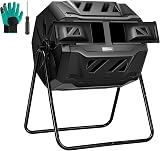
- Twin chambers: Two separate chambers allow one side to finish composting while leaving the other side available to add fresh wastes; Constant alternation of the two sides will create an uninterrupted stream of nutritious compost
- 360⁰ Tumbling Design: The rotating design prevents you from digging or mixing the pile by hand; And the deep fins on eight panels make it easier to turn the compost bin
- Excellent Aeration: Air vents can make the air fully circulate and will not cause an explosion due to excessive internal pressure; Deep fins can better break the clumps, which is conducive to the full fermentation of oxygen
- Sturdy & Durable Construction: Constructed of premium metal frame and high-quality pp plastic body, this tumbling composter is corrosion-resistant, weathering-resistant, sturdy, and durable for long-lasting service life
- Garden Gloves Included: The gloves that not only protect your hands from injury, but are also waterproof, making them easy to clean; With 4 durable ABS plastic claws for easy digging, planting and other gardening work
2. FCMP Outdoor IM4000: Best Budget Dual-Chamber Tumbler
Snapshot: This FCMP compost tumbler is a dual-chamber tumbling composter that competes directly with the VIVOSUN at a lower price point.
Buy if: You want the convenience of a dual-chamber tumbler for continuous batches but are working with a tighter budget.
Skip if: You specifically want the largest chamber capacity available in a tumbler, since this model runs slightly smaller than the VIVOSUN.
Pros: Two separate chambers let you add fresh scraps to one side while the other finishes, the enclosed drum keeps pests out, and the lower price makes it an easy entry point for first-time composters. The listing notes rotating it 5 to 6 times every 2 to 3 days, with compost ready in as little as two weeks under warm, sunny conditions and a balanced mix of materials.
Cons: Slightly less capacity per chamber than some competitors, so heavy scrap producers may fill it faster. Amazon reviewers report mixed experiences with assembly, and a few found it smaller than expected.
Specs: 37 gallons, dual chamber, 30"L x 28"W x 36"H, 28 lbs, 100% post-consumer recycled BPA-free polypropylene with a galvanized steel frame, octagonal shape.
Zone 8A note: Works well for a household's steady kitchen scrap output through the growing season, though you may need a second bin or a Geobin for bulk fall leaves.
Value: Customer reviews consistently call it sturdy and well worth the price, making it a solid budget alternative to the VIVOSUN.

- Efficient Dual-Chamber Composting: Avoid digging and mixing your compost pile by hand. This 8-sided, 37-gallon composter bin features a dual-chamber design that produces a steady flow of nutrient-rich compost, letting you recycle kitchen and yard waste with ease
- Easy and Simple: Rotate 5–6 times every 2–3 days for optimal results. In warm, sunny conditions and with balanced ingredients, compost can be ready in as little as two weeks
- Continuous Composting System: Use one chamber to cure compost while adding fresh scraps and clippings to the other, ensuring a constant supply of ready-to-use compost for your yard or garden
- Easy Turning and Aeration: Deep fins provide a secure grip for rotating and help break up clumps, while aeration holes mix oxygen into the compost for better airflow and faster decomposition
- Tough and Sturdy Build: Wide openings and a removable door make adding and removing compost simple. The 100% post-consumer recycled plastic diverts waste from landfills. BPA-free, and UV- inhibited polypropylene is contact safe and resists fading and damage from direct sunlight. The galvanized steel frame is corrosion resistant
3. Geobin Compost Bin: Best Large-Capacity Yard-Waste Bin
Snapshot: An expandable, open-mesh compost bin built for volume rather than convenience.
Buy if: You generate a lot of leaves, garden cleanup debris, or grass clippings and need a large capacity bin that does not cost much.
Skip if: You want a low-maintenance, pest-resistant option, since this bin requires manual turning and its open sides make it easier for pests to get in.
Pros: Large expandable capacity that outsizes most tumblers by a wide margin, low cost per gallon of capacity, and good airflow that helps large volumes break down.
Cons: No enclosed drum means you turn it by hand with a fork or aerator tool, and the open mesh design is not as pest-proof as a sealed tumbler. Customer reviews are mixed on stability, some say it holds up well to wind and weather, while others find it hard to keep standing upright when full.
Specs: 216 gallons, expandable. 7 lbs, plastic construction, cylindrical shape.
Zone 8A note: This is a strong pick for the fall leaf season specifically, when Zone 8A gardeners are cleaning up large volumes of yard debris ahead of winter. Place it somewhere with partial shade so it does not dry out too fast in the remaining warm weeks.
Value: Frequently called one of the least expensive ways to get large-scale composting capacity, and customers describe it as easy to assemble, move, and reassemble.
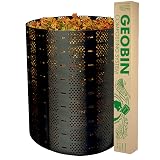
- Large capacity—expandable to 3.75 feet (237 gallon)
- Easy to assemble with closure keys. Easy to move. Easy to reassemble.
- The best value composting bin on the market.
- Excellent ventilation.

4. EPICA Stainless Steel Compost Bin: Best Countertop Scrap Bin
Snapshot: This countertop compost bin is a small stainless steel container designed to hold kitchen scraps on your counter until you carry them out to an actual compost system.
Buy if: You want a tidy, odor-controlled way to collect scraps between trips to your outdoor bin, tumbler, or worm system.
Skip if: You are looking for something that composts on its own. This bin does not break down material, it only stores it.
Pros: Compact countertop size, charcoal filter helps control odor between trips outside, and stainless steel construction is easy to clean.
Cons: This is a collection bin, not a composter. Pair it with one of the outdoor options above to actually produce finished compost. The charcoal filter needs periodic replacement, typically lasting over six months with proper care, which is a small ongoing cost to factor in.
Specs: 1.3 gallons, 7.16" diameter x 11" tall, stainless steel construction, replaceable activated-charcoal filter.
Zone 8A note: A countertop bin is especially useful in summer when you may not want to walk scraps out to a hot backyard bin every single time you cook.
Value: Featured in Bon Appétit and Forbes, and customer reviews consistently mention zero odor and easy cleaning, making it a reliable pairing for any outdoor bin on this list.

- FEATURED IN BON APPETIT & FORBES: Recognized by renowned magazines, EPICA’s compost bin is a perfectly sized marvel for your kitchen, compact yet spacious enough to hold days' worth of compostable organic waste. Measures 7.16" in diameter x 11" high.
- CONTROL KITCHEN ODORS NATURALLY: This indoor compost bin with a charcoal filter features an airtight lid and a replaceable activated-charcoal filter to help reduce odors. Enjoy a fresher kitchen with an odor-free compost bucket designed for daily use.
- EASY TO CLEAN & RESISTANT TO LEAKS: This countertop bin features a one-piece molded design that resists rust and leaks. The container's construction is easy to hand-wash with warm water and is built for everyday convenience. Empty & clean weekly for best results. Rinse the filters and air dry them to extend their life, or replace them (they last 3-6 mo. with regular use). Don't saturate the charcoal filters- gentle rinsing is enough.
- BUILT TO LAST A LIFETIME: Crafted from premium stainless steel, this stainless steel compost container resists scratches and rust for lasting durability. An ideal compost bin for kitchen counter use that combines style with everyday performance.
- REPLACEABLE CHARCOAL FILTER FOR ODORLESS COMPOSTING: Activated-charcoal filters help keep this countertop compost bin fresh by reducing odors. With proper care, each filter lasts 3–6 months, making this compost bucket easy to maintain.
5. REOTEMP Backyard Compost Thermometer: Best Composting Accessory
Snapshot: A long-stem thermometer that lets you check the internal temperature of your compost pile or bin.
Buy if: You are managing a hot compost pile and want to track temperature to speed up decomposition and confirm the pile is breaking down properly.
Skip if: You are a casual composter using a tumbler or worm bin and just want finished compost without tracking temperature closely.
Pros: Gives you a direct read on internal pile temperature, helps you know when to turn or add moisture, and is inexpensive relative to the bins above.
Cons: This is an accessory, not a compost bin. It will not replace any of the systems above.
Specs: 20-inch stainless steel stem, analog dial with 3 temperature zones showing compost activity, hermetically sealed to prevent fogging, includes a free digital composting guide.
Zone 8A note: Useful for confirming whether summer heat is actually helping your pile break down faster or just drying it out.
Value: REOTEMP has made thermometers since 1965, and the packaging is 100 percent compostable with soy-based ink and no plastic, a nice detail for a composting-focused purchase.

- Perfect for the Beginner Composter - Free PDF Digital Compost Guide Included - Expert instructions on how to get started composting and managing your compost pile for the most efficient compost production.
- Reotemp - Accurate and durable thermometers since 1965
- Quality Construction - 20 inch length, 1/4" diameter stem, stainless steel construction, hermetically sealed to prevent fogging
- Read at a Glance Dial Developed by Compost Experts - 3 temperature zones that indicate compost activity, understand your pile with our compost guide
- 100% Compostable Packaging - Printed with soy-based ink, zero waste, no plastic, no Styrofoam, shred the box to use in your compost pile as a brown
Compost Bin Buyer's Guide: How to Choose a Compost Bin
If none of the picks above feel like an obvious fit yet, here is how to choose compost bin options with confidence. Work through these factors in order.
- Capacity. Match the bin to how much waste you actually generate. A small household with modest kitchen scraps does not need a 200-plus gallon bin, while a yard full of mature trees may outgrow a small tumbler every fall.
- Tumbling vs. stationary. Tumblers reduce manual turning but hold less volume. Stationary open bins hold more but require a fork or aerator to mix regularly.
- Pest control. Enclosed tumblers and worm bins do a better job keeping rodents and other pests out than open mesh bins. If pests are a concern in your neighborhood, weight this factor heavily.
- Odor management. A well-balanced pile with enough browns should not smell bad. If odor is a top concern, favor enclosed systems and keep a supply of dry browns like leaves or shredded cardboard on hand.
- Aeration. Compost needs oxygen to break down properly. Tumblers handle this through rotation, open bins need manual turning, and worm bins rely on the worms themselves moving through the material.
- Moisture. Zone 8A summers can dry a pile out fast. Look for a bin you can easily check and water if needed, and consider placement with some shade.
- Shade and access. Following guidance from NC State Extension, keep your bin accessible for regular use but away from the house, and give it some shade to help it retain moisture through hot stretches.
- Kitchen workflow. If your outdoor bin is far from the kitchen, a countertop scrap bin like the EPICA makes it easier to actually keep up with composting day to day instead of letting scraps pile up indoors or go in the trash.
What to Put in a Compost Bin
If you are wondering what can go in compost bin systems, a working pile needs a mix of "greens" and "browns." Greens are nitrogen-rich materials like fruit and vegetable scraps, coffee grounds, and fresh grass clippings. Browns are carbon-rich materials like dry leaves, shredded cardboard, and straw. A rough mix of more browns than greens, with everything kept about as moist as a wrung-out sponge, gives you the best conditions for steady breakdown.
Avoid adding meat, dairy, and oily or greasy foods to a home compost bin. These materials break down slowly, attract pests, and can create strong odors that a backyard system is not built to handle. If your pile starts to smell, the most common fix is adding more dry browns and turning it to improve airflow.
Once you get the greens and browns balance down, learning how to compost at home mostly comes down to consistency: checking your pile every few days, adjusting moisture as needed, and keeping browns on hand for whenever things get too wet or start to smell. Once you have finished compost ready to use, it makes a great addition to the soil in a raised bed, mixed in alongside your existing mix.
FAQs
Do compost bins smell?
A properly balanced compost bin should not have a strong odor. Bad smells usually mean too many wet greens and not enough dry browns, or a pile that is not getting enough air. Adding browns and turning the pile more often typically solves it.
Tumbler vs. bin: which is better?
Tumblers are better if you want less manual turning, better pest control, and a contained system for a smaller yard. Open bins are better if you need more capacity for large volumes of yard waste, like fall leaves, and you don't mind turning the pile by hand.
Where should I put my compost bin?
Choose a spot that is accessible enough for regular use but not right next to the house. Some afternoon shade helps prevent the pile from drying out during Zone 8A's hot summer stretches, while still leaving it easy to reach with a bucket of scraps or a garden fork.
How big should a compost bin be?
It depends on your household size and yard. A single tumbler like the VIVOSUN (43 gallons) or FCMP IM4000 (37 gallons) covers most kitchen scrap output for a small household. Larger yards with significant leaf and grass clippings each fall often need an expandable open bin like the Geobin, which runs around 216 gallons, to keep up.
Do compost bins attract pests or rats?
An open bin like the Geobin is more likely to attract pests since its mesh sides give rodents and other animals easy access. Enclosed tumblers like the VIVOSUN and FCMP do a much better job keeping pests out. Avoiding meat, dairy, and oily foods in your pile also goes a long way toward keeping rodents away regardless of which bin you choose.
What items should not be composted?
Skip meat, dairy, and oily or greasy foods, since these break down slowly, attract pests, and can create strong odors. Diseased plant material, pet waste, and treated or painted wood should also stay out of a home compost bin.