When to harvest onions depends on what you are growing them for. Green onions are ready anytime once the stalks are big enough to use. Fresh eating onions can come out early, before they have fully matured, since you will use them soon. Storage onions need to reach full maturity first, or they will not keep. The signs below tell you exactly where your onions stand, and in Zone 8A, the plant is a better guide than the calendar.
Quick Answer: When Are Onions Ready to Harvest?
Onions are ready to harvest when the tops have fallen over on their own, the necks are dry and narrowed, and the outer skins look papery. Bulbs should also feel like they have reached a full, usable size for the variety, and dry weather around harvest makes curing and storage go more smoothly.
- Tops have fallen over naturally
- Necks are dry and narrowed, not thick and upright
- Outer skins are turning papery
- Bulb has reached a usable size for the variety
- Weather is dry, not right before rain
The 5 Signs Onions Are Ready to Harvest
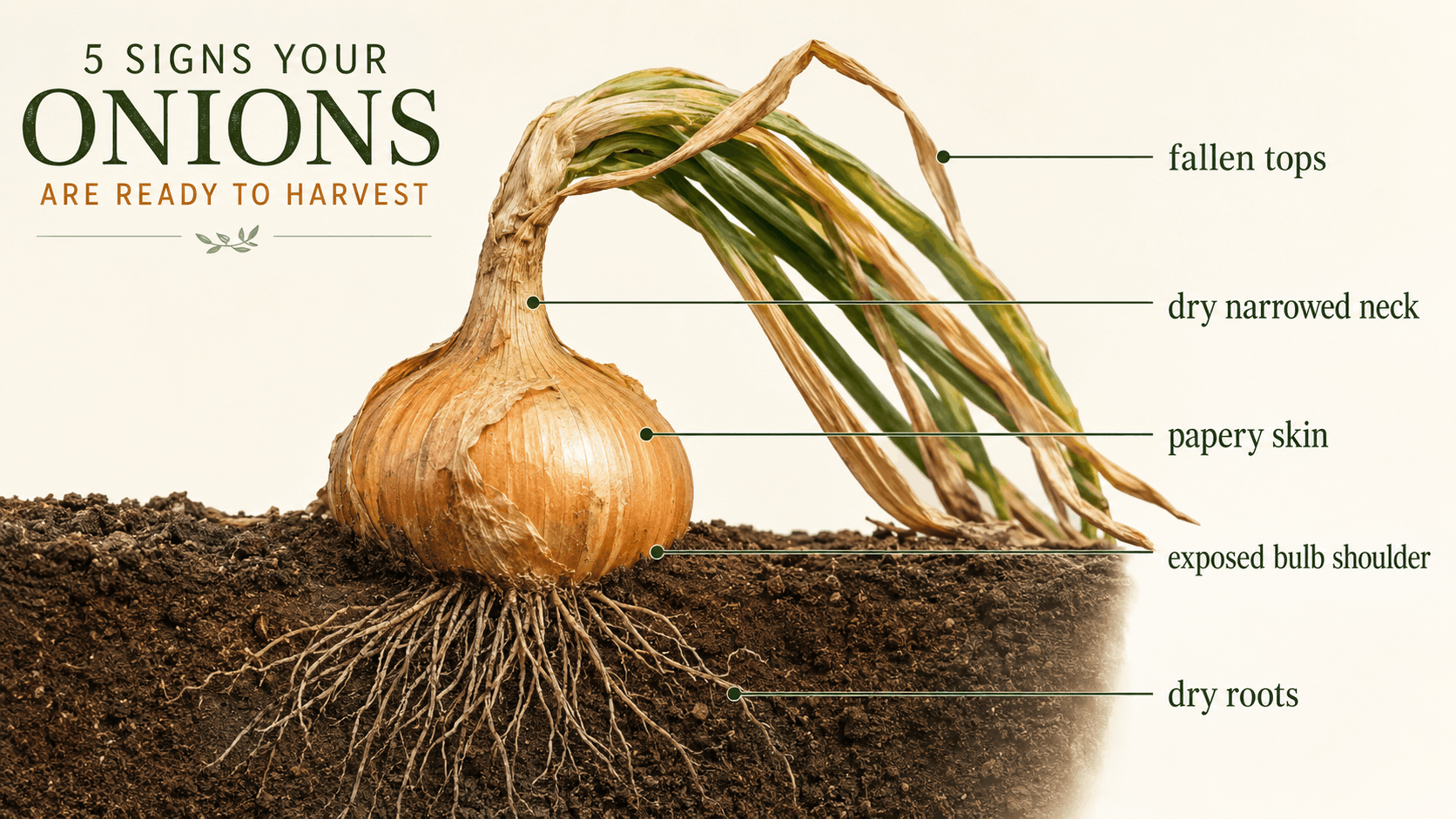
These five signs work together. One alone can be misleading, but when you see most or all of them at once, your onions are ready to come out of the ground.
1. The tops start falling over naturally
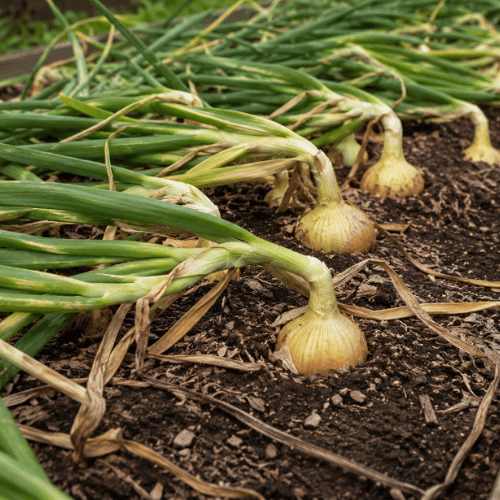
What to look for: Stalks flop over near the base on their own, without you touching them.
As the bulb finishes forming, the plant sends less energy into the leaves, so the stalks lose their rigidity. This is the sign most gardeners already know, and it is a strong one, but it should not be your only test. According to UMass Extension, fallen tops can also be caused by rain, wind, or moisture stress, meaning a bad storm or even a dry spell can knock tops over before the bulb is actually mature. Treat this as your starting point and check the other signs below before you harvest.
2. The necks feel soft, narrow, or dry
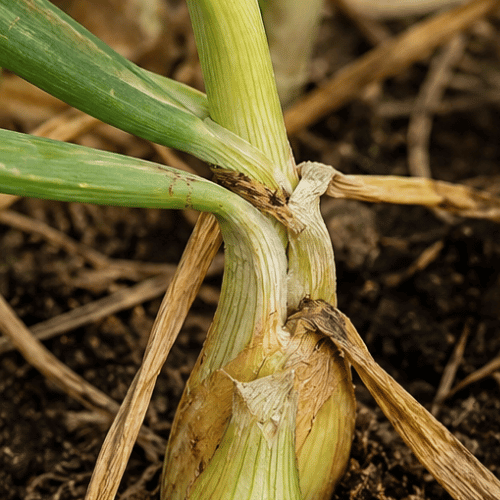
What to look for: The neck, where the stalk meets the bulb, feels thinner and softer than the thick, upright neck of a growing plant.
Run your fingers along the neck to check. This is one of the more reliable maturity signs, since it reflects what is happening inside the bulb rather than something weather could cause.
3. The outer skins are starting to look papery
What to look for: Dry, papery outer layers, sometimes with a faint sheen or color change depending on the variety.
Of the five signs, this is the easiest one for beginners to spot since it does not require touching the plant. Just keep in mind that the fullest papery texture usually develops more during curing than while the bulb is still in the ground. Some skin change before harvest is a good sign. Do not wait for perfectly finished skins before you pull the bulbs.
4. The bulb has reached usable size
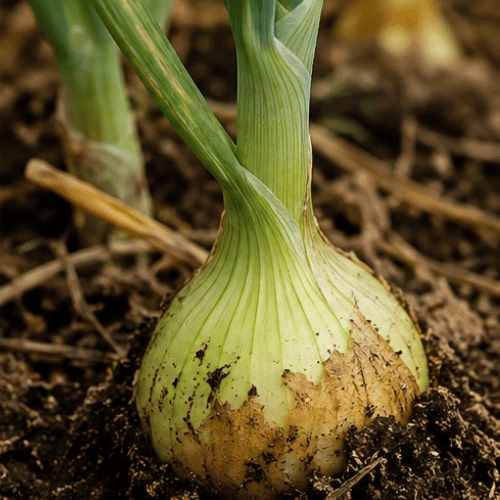
What to look for: Bulb size matches what is typical for the variety when you brush back the soil around the top.
This sign is more of a decision than an observation. You can harvest onions early for fresh eating even if they have not reached full size. Onions pulled early just tend to have thinner skins and shorter storage life, so they are better suited for using soon rather than keeping through winter.
5. The weather is dry enough to harvest and cure
What to look for: A dry stretch in the forecast, without heavy rain right before you plan to harvest.
This last sign is less about the plant and more about protecting your crop from rot. Wet bulbs are more prone to rot and take longer to cure properly, so avoid harvesting right before heavy rain when you can. If your onions look ready but rain is coming, it is usually better to harvest a day or two early in dry conditions than to wait and pull wet, muddy bulbs.
Use this checklist to run through all five signs at a glance:
| Sign | What It Means | Harvest Now or Wait |
|---|---|---|
| Most tops have fallen over naturally | Plant is redirecting energy away from leaves | Harvest, if other signs agree |
| Only a few tops have fallen after rain or wind | Could be weather stress, not maturity | Wait and recheck |
| Necks feel soft, narrow, or dry | Bulb has finished sizing up | Harvest |
| Necks still feel thick and upright | Bulb is still developing | Wait |
| Outer skins look papery | Bulb is close to or at maturity | Harvest |
| Weather is dry | Good conditions for harvest and curing | Harvest |
| Heavy rain is in the forecast | Risk of wet, hard-to-cure bulbs | Harvest early if bulbs are otherwise ready |
When to Harvest Onions in Zone 8A
Zone 8A gardening runs on a different calendar than most national growing guides assume, which is part of why so much generic advice falls short here. Clemson Extension notes that onions grow best in cool weather and are usually fall-planted in South Carolina for a late spring harvest, and the exact window still depends on your planting date, the variety you chose, and the weather that season. Bulb formation is also driven by day length rather than just temperature, and NC State Extension points out that southern growers typically plant short-day varieties, which tend to be sweeter but do not store as long as the long-day types grown farther north. Keep both of those in mind as you think about your harvest window.
| Planting Type | Typical Planting Window (Zone 8) | Typical Harvest Window (Zone 8) |
|---|---|---|
| Fall-planted onions (sets) | October to November | May to June, late spring into early summer |
| Spring-planted onions (transplants) | February to early March | June to July, summer |
| Green or bunching onions | Fall or spring, from sets or transplants | 6 to 8 weeks after planting |
These windows come from Clemson Extension's planting guidance for South Carolina and hold generally across Zone 8. Weather, variety, and your exact planting date will still shift things from year to year, which is why the signs earlier in this guide matter more than any single date on a calendar. For dates tuned to your exact location, use our seed starting schedule generator.
Fall-planted onions
When to harvest onions planted in fall comes down to late spring to early summer in Zone 8A, the window Clemson Extension points to for South Carolina growers. The exact date shifts year to year with weather, so check the plant, not just the calendar, using the signs above before you decide it is harvest time. If you are starting onions from seed for a fall crop, indoor timing matters just as much as harvest timing.
Spring-planted onions
If you planted onions in spring instead, expect a summer harvest. Keep an eye on the forecast as the season goes on, since bulbs can end up smaller than expected if heat arrives early and pushes the plant toward maturity before the bulb has fully sized up.
Green onions and bunching onions
These are grown for a different purpose than storage onions, so the maturity signs above mostly do not apply. You can harvest green onions and bunching onions much earlier, as soon as the stalks reach a usable size. Clemson Extension notes that green and bunching onions can be planted from sets or transplants in spring, giving a quicker turnaround than storage onions.
Should You Wait Until All Onion Tops Fall Over?
This is one of the most common misconceptions in onion harvesting, and the hard truth is no. Waiting for every single top in the bed to fall over before you harvest anything is a mistake. Onions mature at slightly different rates even within the same bed, and letting the earliest bulbs sit in the ground too long increases the risk of splitting, rot, or disease, especially during wet periods. Harvest onions in batches as they hit the signs above rather than waiting for the whole patch to look uniform.
What If Your Onions Flower or Bolt?
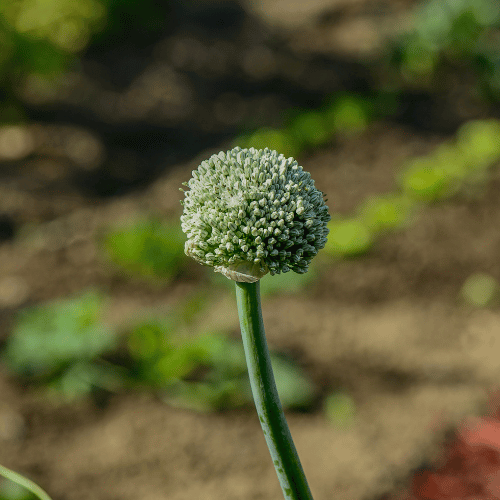
Image by Walter Sturn from Pixabay
What to look for: A tall, rigid flower stalk rising from the center of the plant, usually topped with a round bud or flower cluster.
Bolting happens when an onion sends up a flower stalk instead of putting its energy into the bulb, usually triggered by temperature swings or stress earlier in the season. Bolted onions are still edible, but they generally do not store well, so plan to harvest and use them soon rather than setting them aside for long-term storage. The bulb itself is often smaller and slightly tougher near the core once it has bolted, but it is still fine for cooking.
How to Harvest Onions Without Damaging Them
Careful harvesting matters just as much as good timing, since bruised or nicked bulbs will not store well no matter how ready they were. A good garden fork and a clean pair of snips make the job easier.
Shop garden forks- Loosen the soil around each bulb with a garden fork before you pull, rather than yanking the tops directly.
- Lift the bulb gently by hand once the soil is loosened.
- Avoid bruising or cutting the bulbs during harvest. Any nicks become weak points where rot can start in storage.
- Keep the tops attached to each bulb for now. You will trim them after curing, not before.
- Sort as you go. Set aside any bulbs with soft spots, cuts, or damage to use soon instead of storing them.
A basket with open sides makes it easier to carry bulbs out of the garden without trapping moisture against the skins.
Shop harvest basketsA sturdy pair of garden gloves also helps here, giving you a better grip while you loosen soil and lift bulbs without scraping or bruising them.
Shop garden glovesHow to Cure Onions After Harvest
Curing is the step that determines how long your onions will actually keep, and skipping it or rushing it is one of the fastest ways to lose a storage crop. UMN Extension recommends curing onions in a warm, well-ventilated area for two to four weeks, and Clemson Extension notes you can hang onions in a dark, warm room with good airflow until they are dry.
Where to cure onions
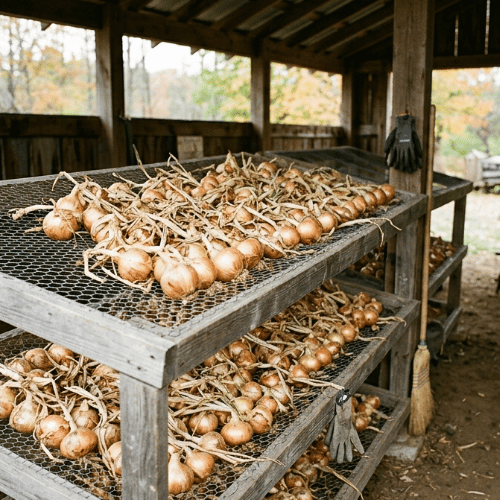
Good curing spots include a garage, shed, covered porch, or any space that stays warm with a wire rack, screen, or mesh surface that lets air move around the bulbs on all sides. Clemson Extension notes a dark, warm room with good airflow works well too, such as hanging bundles from the rafters. Keep onions out of direct wet weather during curing, since moisture is exactly what you are trying to remove.
Tnstbiee Black Iron Garlic&Herb Drying Rack–Space-Saving 81-Hole Metal Dryer
A hanging rack like this one makes that setup easy. It has 81 evenly spaced holes in a 9x9 grid, so each onion or bulb hangs separately with air moving around it on all sides. It is built from 1.5mm carbon steel with a rust-resistant coating and holds up to 5 pounds of produce without bending. Four chains and a ceiling hook let you hang it from rafters, pantry rods, or deck eaves, which keeps your curing onions off the ground and out of reach of pets.
Shop drying rackHow long curing takes
Most onions need about two to four weeks to cure, though the exact time depends on humidity and airflow in your curing spot. Higher humidity means a longer cure. Good airflow speeds things up.
How to know onions are cured
An onion is ready to move to storage when the neck is fully dry, the outer skins are papery, the roots are dry rather than fleshy, and there are no soft spots anywhere on the bulb. If any of those are not true yet, give it more time before you trim and store.
How to Store Onions After Curing
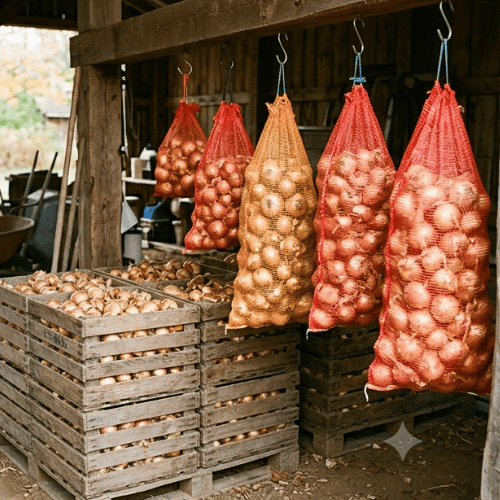
Once curing is finished, store onions somewhere cold, dry, dark, and well-ventilated. Mesh bags, crates, or open boxes work better than sealed containers, since trapped moisture is the main reason stored onions go soft or sprout. UMN Extension says cured onions kept cold and dry typically have a shelf life of around four months, though UGA Extension notes sweet onions keep for a shorter period than standard cooking onions.

- Reusable Onion Storage Bags – Featuring hassle-free drawstring closures and reinforced double stitching on all sides, these bags are the perfect choice for carrying & storing heavy bulk items or produce like onions, potatoes, carrots, apples, oranges, bananas, and anything you want! Easily clean and wash them in cold water, then air dry
- 100% Cotton Onion Sacks – Our bags for onion storage in your pantry are crafted from 100% high-quality organic cotton knit fabric and do not have any harmful chemicals or dyes
- Good Alternative to Plastic and Nylon Bags – With these reusable onion keeper bags, you can reduce plastic waste because our bags are made of 100% cotton which is reusable, washable, and recyclable.
- Safely Store Onions, Potatoes, and Garlic – Protect your root vegetables including onions, potatoes, and garlic from bruising and safely store your produce for up to a week. Our refined breathable mesh material preserves maximum freshness so your favorite fruits & veggies stay as delicious as the day you bought them
- Available in Multiple Sizes – This listing is for 3 bags of our XL (14"x18") size. But we also have bags in sizes L (12 x 15”), M (10 x 12”), and S (8 x 10”). The tare weight is indicated on the label of each bag for cashiers to easily deduct the weight
Which Onions Store Best?
Not all onions are built for long storage. Sweet onions generally do not keep as long as standard cooking onions, since their higher water content and thinner skins break down faster. This matters in the Southeast specifically, because short-day onion varieties commonly grown here tend to be sweeter and shorter-storage than the long-day varieties grown farther north. If you want onions that last through winter, look for storage-type varieties when you plant, and plan to use sweeter varieties sooner rather than setting them aside. When you are choosing seeds or sets for next season, look for labels like "storage onion" or "long-day" on the packet, since those tell you upfront whether a variety is built to last or best used fresh.
When to harvest red onions and when to harvest yellow onions comes down to the same signs covered above. The color of the onion does not change the maturity signals, but it does affect how long the bulb keeps. Standard yellow storage onions tend to hold the longest, while red onions store for a shorter, though still useful, window.
| Onion Type | When to Harvest | Best Use | Storage Potential |
|---|---|---|---|
| Green or bunching onions | Once stalks reach usable size, well before bulbing | Fresh eating | Not stored, use fresh |
| Fresh-eating bulb onions | Early, before full maturity signs appear | Cooking soon after harvest | Short, a few weeks |
| Sweet or short-day storage onions | Full maturity signs present | Cooking and near-term storage | Moderate, several weeks to a couple months |
| Standard yellow storage onions | Full maturity signs present | Long-term storage | Long, up to around four months |
| Red onions | Full maturity signs present | Cooking and moderate storage | Moderate, shorter than yellow storage types |
| Bolted onions | As soon as noticed | Use soon | Poor, does not store well |
Common Onion Harvesting Mistakes
Most storage failures are preventable. A few habits cause most of the problems gardeners run into after a good growing season, and knowing them ahead of time is easier than fixing a batch of onions gone soft in the pantry.
| Mistake | What Happens | Better Approach |
|---|---|---|
| Harvesting too early | Smaller bulbs and shorter shelf life | Check for multiple maturity signs, not just size |
| Waiting too long to harvest | Increased risk of splitting, rot, or regrowth | Harvest in batches as bulbs mature rather than waiting for the whole bed |
| Washing bulbs before curing | Adds moisture that slows curing and invites rot | Brush off dry soil instead, wash only right before use |
| Cutting tops too soon | Removes energy the bulb still needs and opens the neck to rot | Leave tops attached until after curing |
| Curing in a humid area | Slows drying and increases rot risk | Choose a warm, dry, well-ventilated space |
| Storing damaged onions with good ones | Rot can spread from bruised bulbs to healthy ones | Sort out damaged bulbs and use them first |
Once the bed is empty, it is also a good time to think about rebuilding your soil and topping it off with fresh compost before the next crop goes in.
Curing vs. Storage Conditions
Curing and storage need different conditions, so it helps to see them side by side.
| Stage | Temperature | Airflow | Light | Timing |
|---|---|---|---|---|
| Curing | Warm | High, well-ventilated | Can be dark or indirect light | 2 to 4 weeks |
| Storage | Cold | Moderate, avoid sealed containers | Dark | Up to about 4 months, depending on variety |
FAQs About Harvesting Onions
How do you know when onions are ready to harvest?
Check for fallen tops, dry necks, papery skins, full bulb size, and dry weather. One sign alone is not enough.
What happens if you harvest onions too early?
The bulbs will be smaller and will not store as long.
Can you leave onions in the ground too long?
Yes. Overmature onions may split, rot, sprout, or lose storage quality.
What do onions look like when growing?
Upright green tops with a bulb forming at the base. As the bulb matures, the tops flop over and dry out.
Can you eat onions straight from the garden?
Yes. Fresh onions can be eaten immediately, but storage onions need curing first.
What do I do with bolted onions?
Harvest and use them soon. They generally do not store well.
How do you cure onions?
Keep the tops attached, move bulbs to a warm, dry, well-ventilated spot out of direct wet weather, and let them dry for two to four weeks.
What happens if you don't cure onions?
Uncured onions are more likely to rot, sprout, or spoil quickly in storage.
How do you store onions after harvest?
Cure them first, then store in a cold, dry, dark, well-ventilated spot. Mesh bags, crates, or open boxes work better than sealed containers.
Harvest Based on the Plant, Not Just the Calendar
Zone 8A timing gives you a useful starting window, but the plant itself always has the final say. Check the tops, the neck, the skins, the bulb size, and the weather together, and harvest in batches as bulbs actually mature rather than waiting for a single date.
Shop onion seedsThis post contains affiliate links. As an Amazon Associate, RadGarden earns from qualifying purchases.